---
title: The Car That Knew Too Much - Blackfish Files - Blackfish Intelligence
description: A Blackfish Intelligence investigation uncovered a hidden GPS tracking device installed via OBD-II in a vehicle surveillance case, leading to a confession.
image: https://blackfishintel.com/hubfs/Website%20Images/Car_Nav.webp
---
[](https://blackfishintel.com?hsLang=en)
×
- [ABOUT US](https://blackfishintel.com/about?hsLang=en)
- Menu Item 1
- Sub-menu Item 1
- Another Item
- Sub-menu Item 2
- Menu Item 2
- Yet Another Item
- Menu Item 3
- Menu Item 4
- SERVICES
- Criminal Investigations
- [Criminal Defense Investigation](https://blackfishintel.com/services/criminal-investigations)
- [Trial Consultation](https://blackfishintel.com/services/trial-consulting)
- [Missing Persons Investigations](https://blackfishintel.com/services/missing-persons)
- Civil & Family Investigations
- [Family Law](https://blackfishintel.com/services/family-law)
- [Surveillance](https://blackfishintel.com/services/surveillance)
- [Background Investigations](https://blackfishintel.com/services/background-investigations)
- [Digital Forensics Investigations](https://blackfishintel.com/services/digital-forensics)
- [Cell Phone & Computer Forensics](https://blackfishintel.com/services/digital-forensics)
- [AI Investigations](https://blackfishintel.com/services/ai-investigations)
- [Technical Surveillance Countermeasures](https://blackfishintel.com/services/technical-surveillance-countermeasures)
- [Government TSCM](https://blackfishintel.com/services/government-tscm)
- [Corporate TSCM](https://blackfishintel.com/services/corporate-tscm)
- [Residential TSCM](https://blackfishintel.com/services/residential-tscm)
- [e-Discovery](https://blackfishintel.com/services/e-discovery)
- [Exit Audits](https://blackfishintel.com/services/e-discovery)
- [Data Culling & Processing](https://blackfishintel.com/services/e-discovery)
- [Regulatory, Back-Up & Archiving](https://blackfishintel.com/services/e-discovery)
- [Blackfish Files](https://blackfishintel.com/blackfish-files?hsLang=en)
- Menu Item 1
- Sub-menu Item 1
- Another Item
- Sub-menu Item 2
- Menu Item 2
- Yet Another Item
- Menu Item 3
- Menu Item 4
- [CAREERS](https://blackfishintel.com/careers?hsLang=en)
- Menu Item 1
- Sub-menu Item 1
- Another Item
- Sub-menu Item 2
- Menu Item 2
- Yet Another Item
- Menu Item 3
- Menu Item 4
- [CONTACT](https://blackfishintel.com/contact?hsLang=en)
- Menu Item 1
- Sub-menu Item 1
- Another Item
- Sub-menu Item 2
- Menu Item 2
- Yet Another Item
- Menu Item 3
- Menu Item 4
- - Criminal Investigations
- [Criminal Defense Investigation](https://blackfishintel.com/services/criminal-investigations)
- [Trial Consultation](https://blackfishintel.com/services/trial-consulting)
- [Missing Persons Investigations](https://blackfishintel.com/services/missing-persons)
- Civil & Family Investigations
- [Family Law](https://blackfishintel.com/services/family-law)
- [Surveillance](https://blackfishintel.com/services/surveillance)
- [Background Investigations](https://blackfishintel.com/services/background-investigations)
- [Digital Forensics Investigations](https://blackfishintel.com/services/digital-forensics)
- [Cell Phone & Computer Forensics](https://blackfishintel.com/services/digital-forensics)
- [AI Investigations](https://blackfishintel.com/services/ai-investigations)
- [Technical Surveillance Countermeasures](https://blackfishintel.com/services/technical-surveillance-countermeasures)
- [Government TSCM](https://blackfishintel.com/services/government-tscm)
- [Corporate TSCM](https://blackfishintel.com/services/corporate-tscm)
- [Residential TSCM](https://blackfishintel.com/services/residential-tscm)
- [e-Discovery](https://blackfishintel.com/services/e-discovery)
- [Exit Audits](https://blackfishintel.com/services/e-discovery)
- [Data Culling & Processing](https://blackfishintel.com/services/e-discovery)
- [Regulatory, Back-Up & Archiving](https://blackfishintel.com/services/e-discovery)
[](https://blackfishintel.com/hs/cta/wi/redirect?encryptedPayload=AVxigLL7itpOco7lvtJDcsfp6Rtgpy5EnHBHcZEyP2%2B%2FUrpECE3DIPi2Hc8kz4djJjhwQNN5sVC7eaQHEMMh5gcmYyaZRF0eO6q4DjAEStEUml1%2FgtiEkvk%2Bk5gjXQbawB%2BYsM0NmCJKqs4Nmk3LiBpjMElc3ycRMSwWKINEMfGHDTzKsZmNO9Y%3D&webInteractiveContentId=159683943748&portalId=45284231&hsLang=en)
# The Car That Knew Too Much
THE BLACKFISH FILES
[](http://www.facebook.com/share.php?u=https%3A%2F%2Fblackfishintel.com%2Fblackfish-files%2Fthe-car-that-knew-too-much%3Futm_medium%3Dsocial%26utm_source%3Dfacebook) [](http://www.linkedin.com/shareArticle?mini=true&url=https%3A%2F%2Fblackfishintel.com%2Fblackfish-files%2Fthe-car-that-knew-too-much%3Futm_medium%3Dsocial%26utm_source%3Dlinkedin) [](https://twitter.com/intent/tweet?original_referer=https%3A%2F%2Fblackfishintel.com%2Fblackfish-files%2Fthe-car-that-knew-too-much%3Futm_medium%3Dsocial%26utm_source%3Dtwitter&url=https%3A%2F%2Fblackfishintel.com%2Fblackfish-files%2Fthe-car-that-knew-too-much%3Futm_medium%3Dsocial%26utm_source%3Dtwitter&source=tweetbutton&text=)
## The Concern
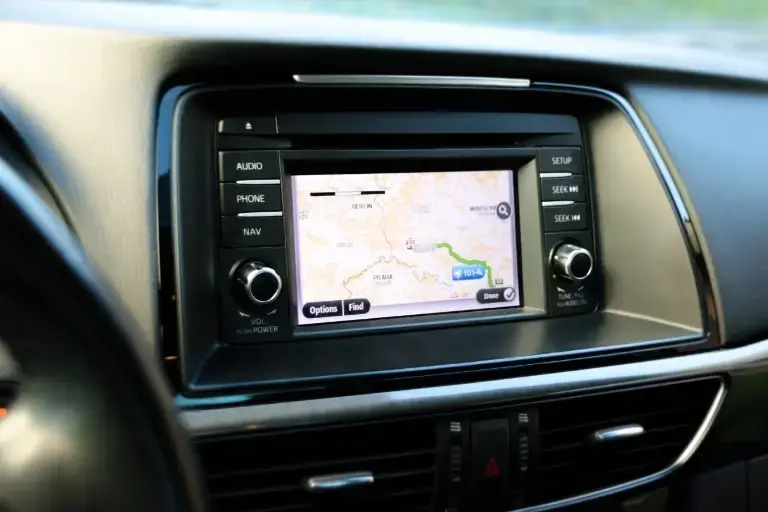
Our client began to suspect that their movements were being monitored. There were no overt threats or confrontations, but repeated circumstances suggested that a third party had knowledge of their location and routines beyond what could be reasonably inferred.
The concern was not based on a single incident, but on a consistent, historical pattern that defied the explanation of coincidence.
## Our Client
The client was the sole operator of the vehicle in question with no others on the title, and denied authorizing or installing any tracking, telematics, or monitoring devices. No insurance, fleet, or service-based explanation existed for third-party access to the vehicle’s diagnostic systems.
## The Problem
Modern tracking devices are increasingly designed to avoid detection. Unlike traditional magnetic GPS trackers, devices integrated into a vehicle’s systems—particularly through the OBD-II diagnostic port—can operate continuously, draw constant power, and remain concealed in areas not routinely inspected.
If present, such a device would allow for persistent, high-confidence monitoring of the vehicle’s movements without the client’s knowledge.
## Our Findings
A structured inspection of the vehicle’s interior and diagnostic interface revealed an aftermarket OBD-II splitter installed beneath the driver-side dashboard. Connected to the secondary output of this splitter was an unlabeled electronic module inconsistent with any legitimate or disclosed use. The device:
- Drew continuous power directly from the vehicle
- Was concealed from normal view
- Exhibited characteristics consistent with a multi-constellation GNSS tracking device, including compatibility with systems such as BeiDou
Its configuration allowed for uninterrupted operation without reliance on batteries and without requiring physical retrieval, consistent with long-term surveillance deployment.
The installation method—using a splitter rather than direct connection—indicated an effort to obscure the presence of the device while preserving access to the diagnostic port.
The device was documented in place and removed under controlled conditions for preservation.
## The Outcome
Following documentation and removal, the suspected individual initially denied any knowledge of the device. Upon being advised that Blackfish Intelligence was prepared to conduct forensic extraction and analysis of vehicle system data, including historical access and positional data through industry-standard tools such as Berla iVe, the individual reversed their position.
A full admission was made acknowledging responsibility for the installation and use of the tracking device. The client’s concerns were substantiated, and the presence of the device—combined with the subsequent confession—established clear evidence of unauthorized monitoring.
We Will Assist You 24/7
## Quick Contact
[](https://blackfishintel.com/?hsLang=en)
#### HEADQUARTERS
- 2745 Dallas Parkway, Ste 405
Plano, TX 75093
- [800-403-8024](tel:8004038024)
- [office@blackfishintel.](mailto:office@blackfishintel.net)net
- License #A07282601
#### The Partners
Daryl Parker
## Daryl Parker
### PRESIDENT & SR. INVESTIGATOR
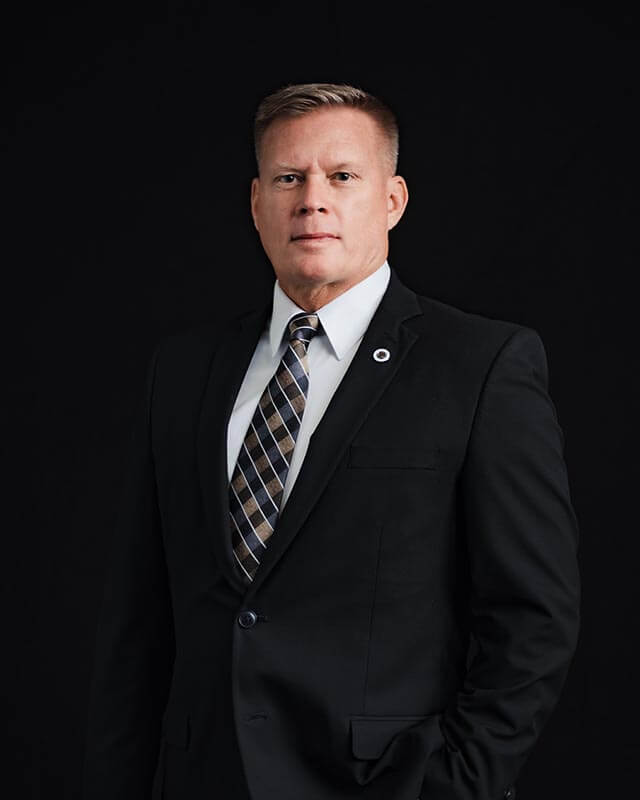
Daryl Parker is a U.S. Marine Corps veteran, and a board-certified Criminal Defense Investigator with over twenty-five years of experience in military, law enforcement, and private investigations. His work includes high-profile cold-case investigations, and founding a non-profit providing investigative services for potential wrongful conviction cases. Daryl is also a certified Force Science Analyst and a Firearms Expert.
[Contact Daryl](mailto:daryl@blackfishintel.com)
JD Spielman

## JD Spielman
### PARTNER & SR. INVESTIGATOR
JD Spielman is a U. S. Army veteran and a board-certified Criminal Defense Investigator with over 30 years of experience in law enforcement. In 2010 he was selected as the Investigator of the Year by the Dallas County District Attorney, and subsequently became the Deputy Chief Investigator with the Collin County DA’s office. He is currently in charge of the Criminal Investigations division at Blackfish.
[Contact JD](mailto:jd@blackfishintel.com)
Nathan Goldman

## Nathan Goldman
### Partner
Nathan Goldman is the Director of Digital Forensics, leading complex digital investigations with expertise and precision. He holds a Master’s degree in Digital Forensics and Cyber Security from Sam Houston State University and a Bachelor’s degree in Criminal Justice. Certified as a Cellebrite Operator (CCO), Magnet Certified Forensics Examiner (MCFE), and Magnet Certified Verakey Examiner (MCVK), he excels in mobile, computer, and cloud-based forensic analysis.
[Contact Nathan](mailto:nathan@blackfishintel.com)
Maddy Wickham

## Maddy Wickham
### Partner
With over 10 years of experience leading complex investigative operations, Maddy Wickham is a recognized leader in high-stakes surveillance and background investigations. Named the 2025 Blackfish Investigator of the Year, she excels at surveillance operations, infiltration tactics, and multi-layered investigative strategies that deliver critical results. From skip-tracing, missing persons, asset identification, advanced OSINT analysis, and criminal investigations, Maddy has a proven track record of winning, saving clients millions of dollars in lawsuits through meticulous investigative work. She also excels in online reputation management and privacy protection, helping high-profile individuals and executives shield their personal information from public exposure. Known for her caring and disciplined approach, Maddy consistently delivers actionable intelligence that drives successful outcomes.
[Contact Maddy](mailto:maddy@blackfishintel.com)
#### HELPFUL LINKS
- [About](https://blackfishintel.com/about)
- [Services](https://blackfishintel.com/services)
- [Digital Forensics](https://blackfishintel.com/services/digital-forensics)
- [Careers](https://blackfishintel.com/careers)
- [Contact](https://blackfishintel.com/contact)
#### THE BLACKFISH FILES
- [Fourth Of July Fireworks](https://blackfishintel.com/blackfish-files/fourth-of-july-fireworks)
- [Acquitted Of All Charges](https://blackfishintel.com/blackfish-files/acquitted-of-all-charges)
- [Benjamin Spencer Released](https://blackfishintel.com/blackfish-files/benjamin-spencer-released)
- [Fish Out Of Water](https://blackfishintel.com/blackfish-files/fish-out-of-water)
[Privacy Policy](https://blackfishintel.net/privacy-policy)
BLACKFISH © - All Rights Reserved.

```json
{
"@context" : "http://schema.org",
"@type" : "Organization",
"address" : {
"@type" : "PostalAddress",
"addressCountry" : "United States",
"addressLocality" : "McKinney",
"addressRegion" : "Texas",
"postalCode" : "75070",
"streetAddress" : "3600 Eldorado Parkway, Bldg. D, Suite 2"
},
"author" : {
"@type" : "Organization",
"name" : "Design Sanctum"
},
"contactPoint" : [ {
"@type" : "ContactPoint",
"contactType" : "front office",
"telephone" : "+1-800-403-8024"
} ],
"description" : "Unlock trusted intelligence with Blackfish. Our industry-leading investigations & digital forensics empower actionable insights.",
"email" : "office@blackfishintel.com",
"geo" : {
"@type" : "GeoCoordinates",
"latitude" : "33.16929289015008",
"longitude" : "-96.66768649018867"
},
"logo" : "https://45284231.fs1.hubspotusercontent-na1.net/hubfs/45284231/Logos/BF_Logo_Tan-1024x219.png",
"name" : "Blackfish Intelligence",
"provider" : {
"@type" : "Organization",
"name" : "Design Sanctum",
"url" : "https://designsanctum.com"
},
"sameAs" : [ "https://www.facebook.com/BlackfishIntelligence/", "https://www.instagram.com/blackfishintel/", "https://www.linkedin.com/company/blackfish-intelligence/", "https://twitter.com/BlackfishIntel" ],
"url" : "https://blackfishintel.com/"
}
```